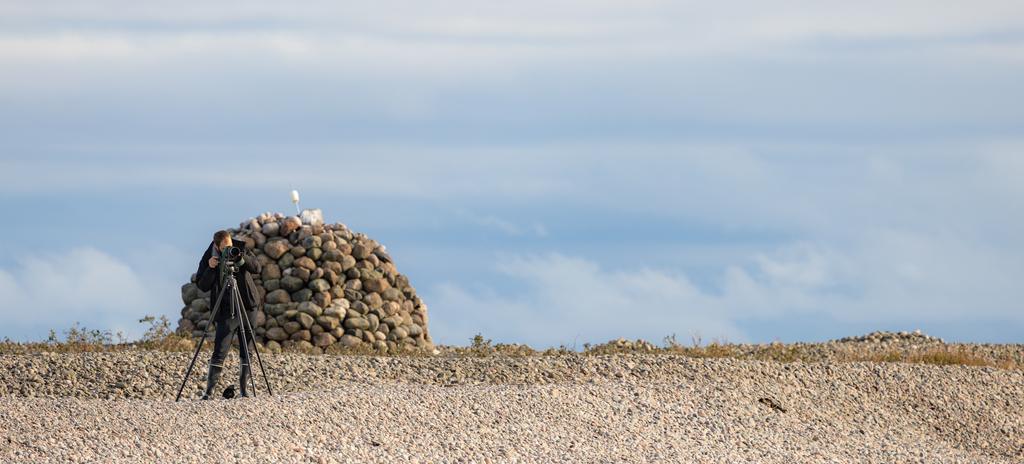
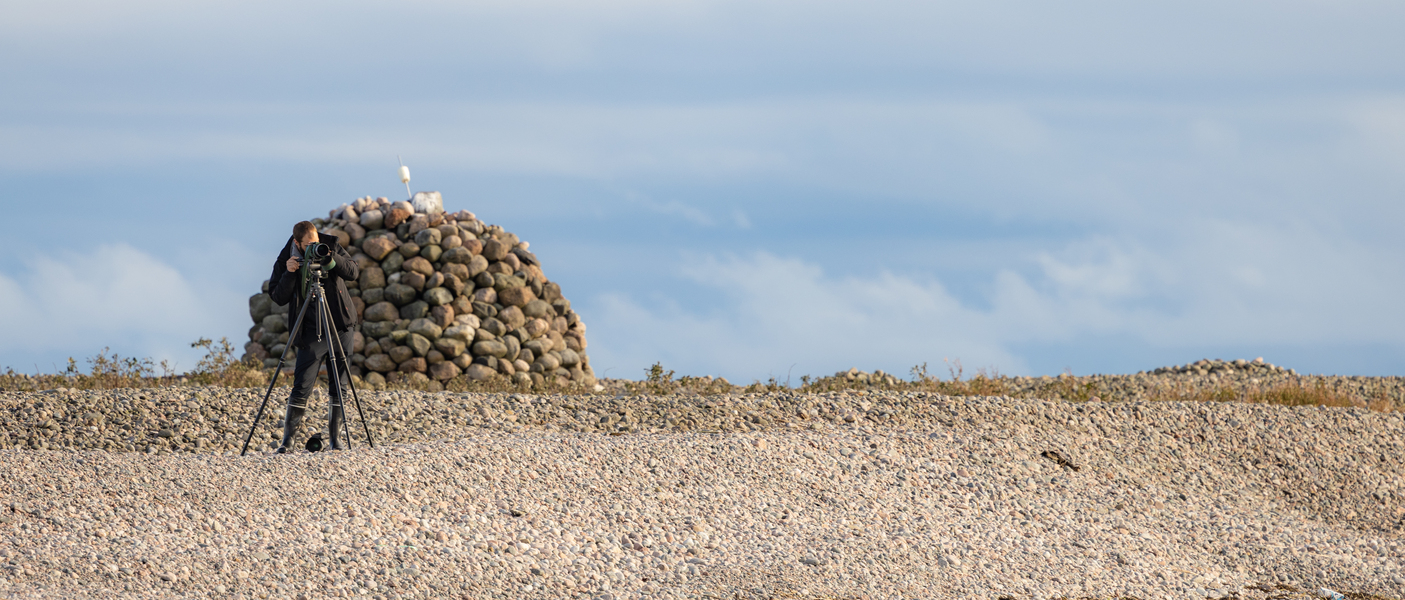
Gåsören is a narrow, 300-meter-long reef at the beginning of the Salpausselkä ridge. This exceptional island, located out at sea about 8 kilometers from the edge of the archipelago, is entirely covered in smooth, rounded stones – with no bedrock or trees in sight. Stones from Gåsören were once used to pave the streets of St. Petersburg.
In spring and autumn, it becomes the stage for a breathtaking natural spectacle. The horizon fills with migrating flocks of long-tailed ducks and black scoters, among others. Hundreds and even thousands of birds fly over the reef in waves — from the left, right, and directly overhead — as far as the eye can see.
Despite its barren appearance, the island is a favorite among birds. Species like sandwich terns, Arctic terns, and dunlins nest here. Gåsören’s position in the middle of the offshore migration route provides incredible views of the passing bird flocks as well as expansive seascapes and mainland vistas.
Gåsören is an excellent destination in good weather. Landing on this rocky islet isn’t easy, so be prepared to get your socks wet. Although it’s not suitable for hiking, it’s absolutely worth experiencing and seeing.
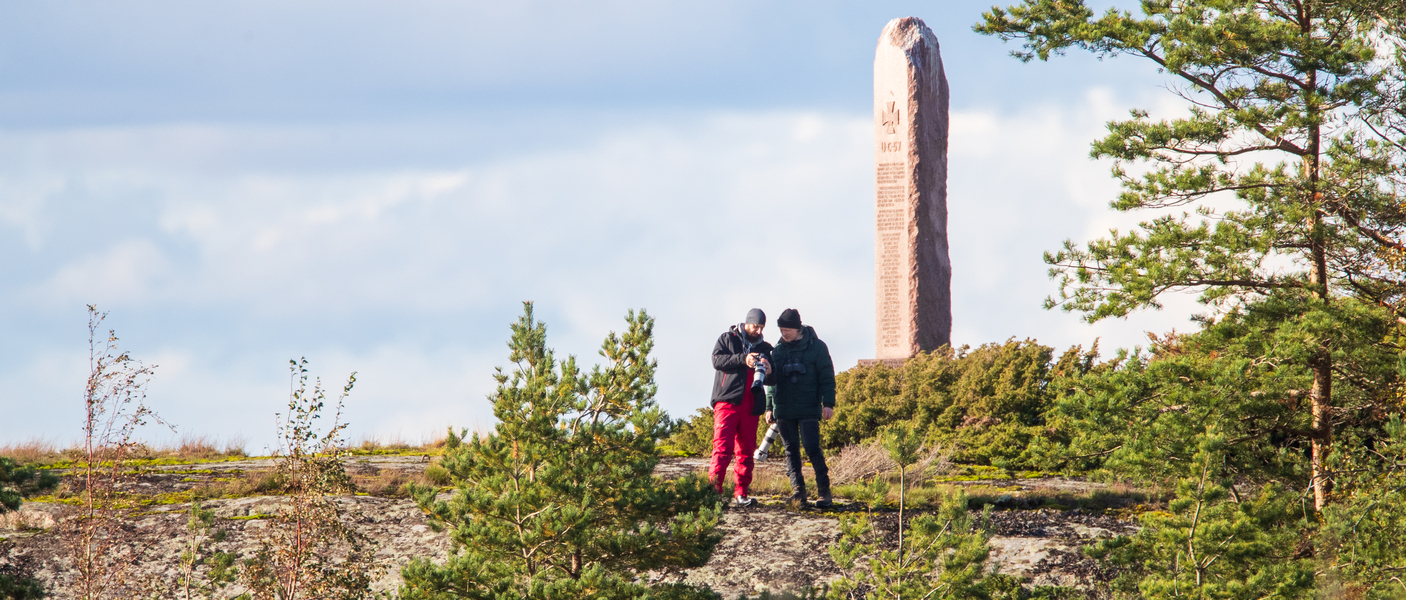
Hamnskär is an island located off the coast of Loviisa, known for its diverse nature and rich history. It is a popular birdwatching destination, especially during the spring and autumn migrations. Situated about 16 kilometers — or a half-hour boat ride — from the mainland, the island is the first green landmass visible when approaching from Estonia, making it a vital resting spot for migratory birds. In spring in particular, it is possible to observe rare species, waterfowl, raptors, and various small birds.
The island offers a variety of terrains for hikers: large rock formations, tide pools, scenic bays, forest areas, woodland ponds, and diverse plant life. Dense juniper thickets provide shelter for small birds. Hamnskär’s location in the middle of an offshore migration route makes it an excellent site for bird observation.
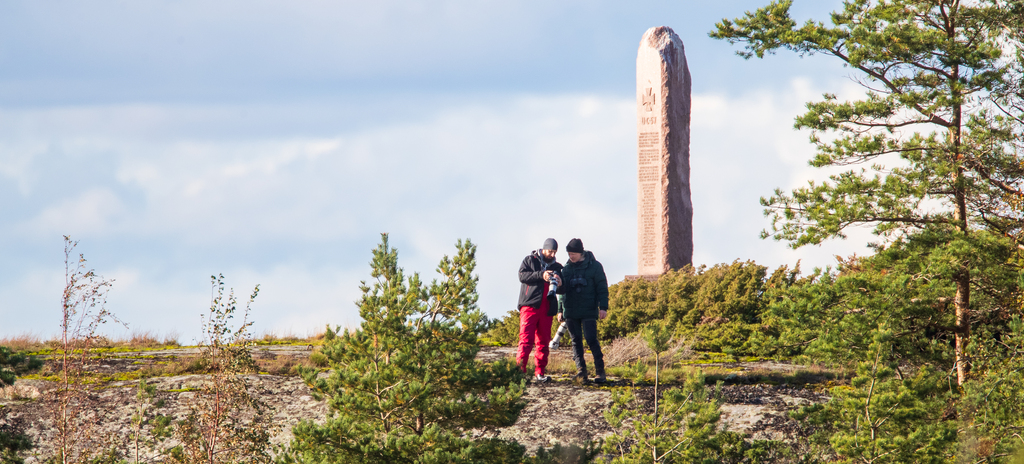
As a historical point of interest, the island features a roughly five-meter-tall stone monument dedicated to the German submarine UC 57. The submarine was last seen near the island in 1919 before disappearing on its return journey to Germany.
Landing on the island requires favorable weather conditions: the wind should not exceed 6 m/s from the southwest to ensure a safe approach. There are no docks on the island, so landing is done directly onto the shore. Hamnskär is a family-friendly and scenic destination, but due to uneven terrain, it is not fully accessible for people with reduced mobility.
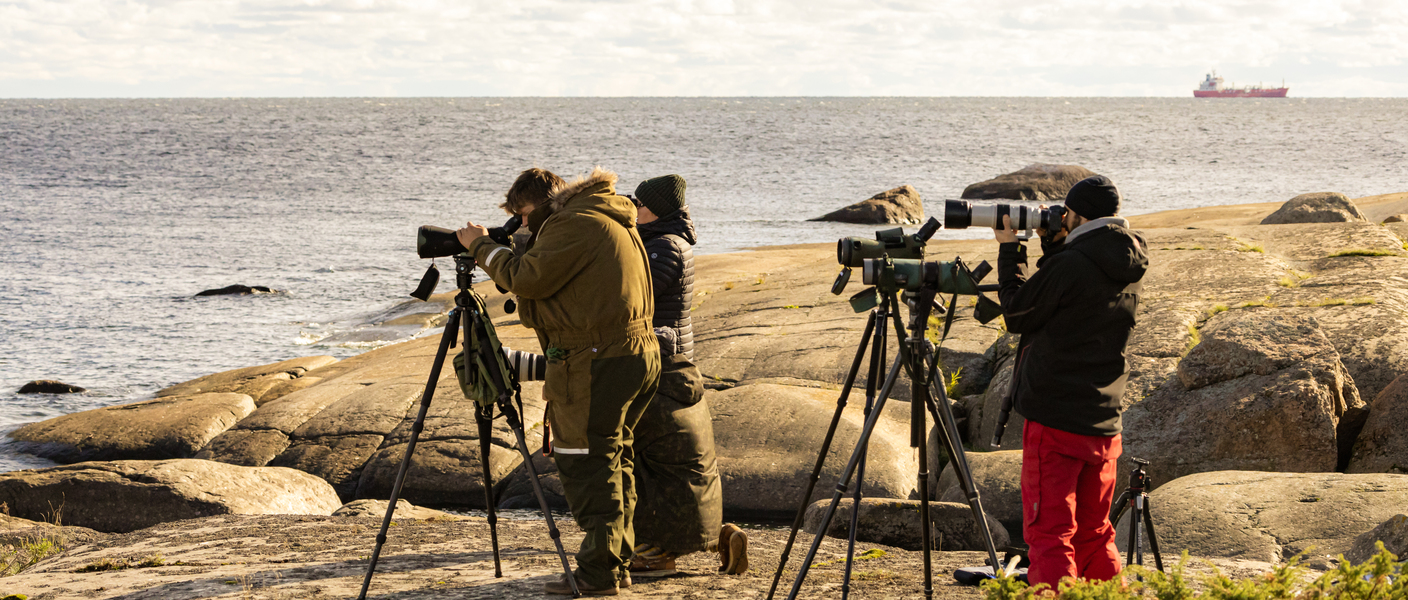
Norra Sandön is located just about 500 meters west of Saari. This island, part of the Uusimaa recreational area, is known for its beautiful sandy beaches and is a popular destination for hiking and outdoor excursions. Landing on the island is easy in all weather conditions — even strong winds do not prevent access. The island is also well-suited for camping. The rocky cliffs at the southern end offer an excellent spot for birdwatching. A trail runs along the eastern edge of the island; avoid walking through private yards in the middle section.
The island offers great opportunities for bird observation. After landing on the sandy beach and walking about one kilometer to the southern tip, you reach the heart of the main migration route.
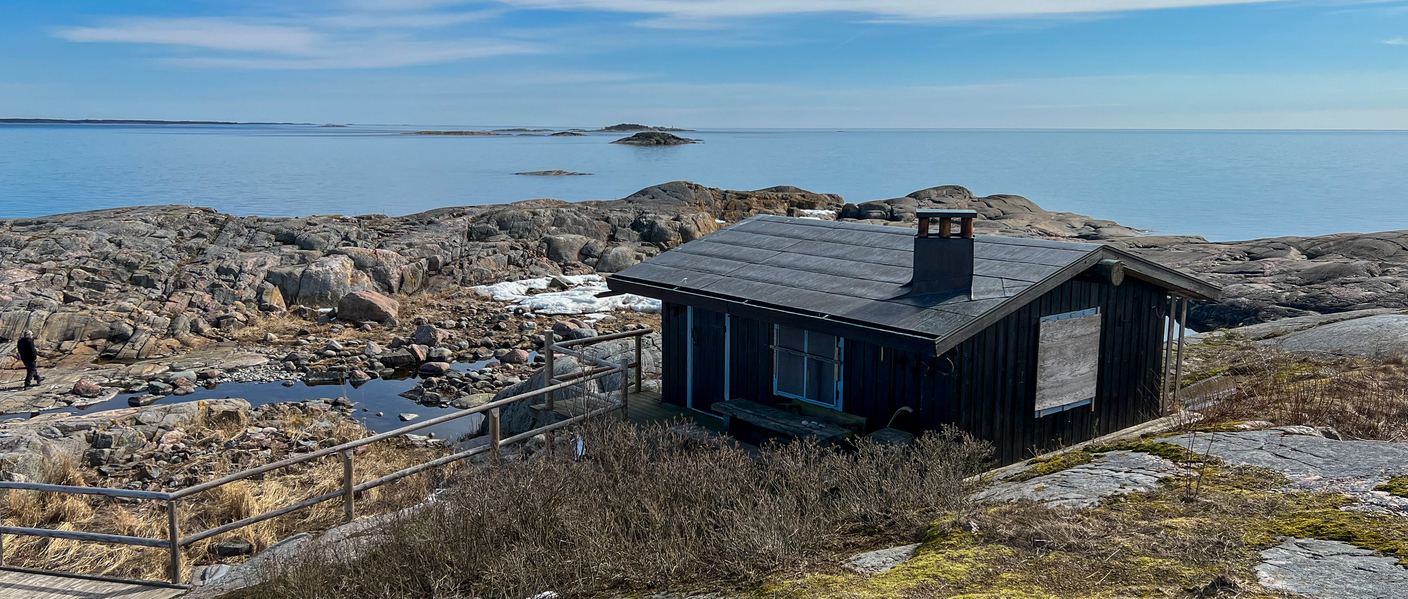
Klovharun is a small, rugged island in the outer archipelago of Porvoo, known not only as author Tove Jansson’s summer retreat but also as a unique nature destination. The island’s rocky shores and open sea surroundings provide an excellent setting for bird enthusiasts.
White-tailed eagles, black guillemots, and common eiders are particularly common in the area, and the birdlife of the archipelago changes with the seasons. In spring and autumn, the islands serve as an important resting place for migrating birds.
Tove Jansson spent nearly thirty summers on the island with her life partner Tuulikki Pietilä, and its isolation inspired many of her works. Today, Klovharun is owned by the Pellinge Heritage Association and is a protected nature site, with visits permitted only on a limited basis.
The island’s nature is delicate, and its vegetation has adapted to harsh, wind-swept conditions. Moving across the rocky terrain requires care, and pets are not allowed on the island. Visitors are encouraged to respect the island’s peace and quiet.
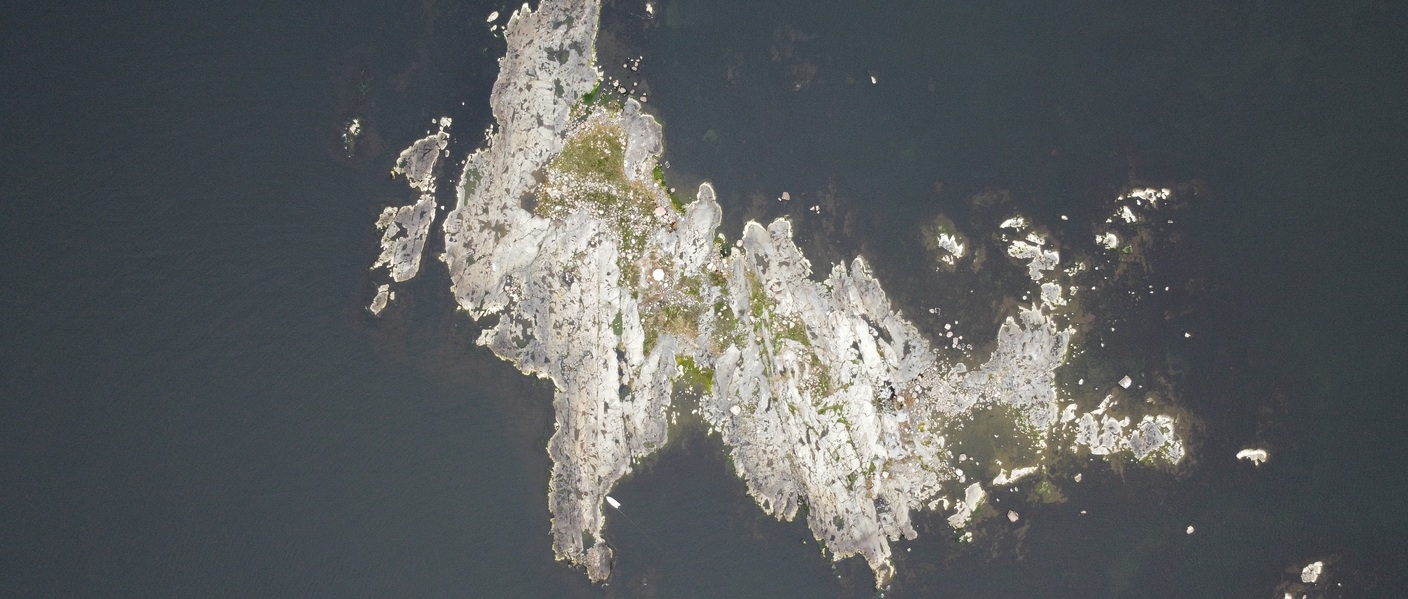
This section presents a few recommended hiking and nature spots. In addition to the ones already mentioned, the following islands near Pellinge are also excellent for outdoor excursions:
Låkskärr
Located along the main seabird migration route. Ideal for camping. Just a few kilometers from the cabin.
Skvåttan
A rocky islet on the edge of the open sea. Situated in state-owned waters, the treeless island is also used for hunting.
Stora Kummelskärr
This island is like a miniature version of Hamnskär. Also suitable for camping.
Högharun
A small island southwest of Klovharun. Landing is prohibited during the nesting season.
Haveören
A home islet for a colony of razorbills. Landing is not possible, but birds can be observed and photographed from a boat.